Story
A Chapter from Burned: Rising from the Ashes of Spiritual Crisis

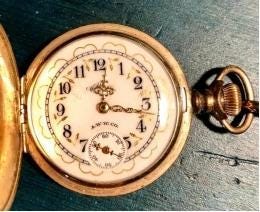
This Is Where I Am in Time
This is where I am in time,
I think as I glance at the calendar on my wall,
A block for today on the page for this month,
This year, this lifetime:
Here I am.
Yesterday I had been traveling around and about,
Finding my way on a map,
Looking ahead to each place I would visit
Before my ending destination: home,
Where I am now.
So I thought as I looked curiously at this calendar
That this too was a map of time,
My time, my place in time:
Here I am, here and now
For just one moment,
Then on to the next now and the next.
Though I still meander around and about
In my memory, my history,
Gathering stories and images and vintage beauties,
These souvenirs I bring along.
Still, I cannot go back in time.
I only move forward with the wisdom
I hope I have gleaned
Into a future unseen.
This is where I am in time.
I am here and I am now,
On my journey day by day by day
Toward home.
The Power of Story
“You’re such a PoMo!” my Presbyterian pastor, Mike, once chuckled as I shared how much I love the narrative storytelling approach to just about anything. (PoMo is short for postmodernist, which I use in the very limited cultural sense of an eclectic person who appreciates story and art as a life approach. The actual definition of postmodernism is so much more complex, intellectual, and ambiguous.) PoMo or not, I usually describe myself as a “fluid poet soul” whose grandest vision of celestial bliss is nestling into a cozy cloud to listen to storytime for eternity. I imagine endless conversations with saints from every century and culture, finally grasping all of the beautiful interweavings from one story to another. What I cannot even begin to fathom now will ultimately make sense. The trials and tragedies will transform into triumphs. All the questions of theodicy will be solved. Bliss!
Yet here and now, I still live with the trials and tragedies in real time. Here and now, I am often gasping for air. Other than the hope of Heaven, I can’t always foretell a happy ending because I’m too busy coping in the messy middle. It is difficult for me to contemplate some of the painful stories from my own life, whether past or present. Beyond my own life, I can barely bear to watch the national or international news.
Yet despite my angst from what I see around and within me, I still love stories. I have read countless picture books and novels with my children, never shying away from the difficult stories of the Civil Rights Movement or the Holocaust. I know that grappling through tragedy in these narratives helps us to also navigate the trials in our own lives. I am strengthened when I read a biography or autobiography in which some ordinary person faces extraordinarily tough challenges, and despite stumbling and doubting and opposition, still manages to push through with resilience and resourcefulness. I love to sit and listen to others tell about their lives. I am thinking of an older woman in my old church who has such a wealth of sweet and stormy life experiences that I could easily glean wisdom from her stories for hours on end.
As a story lover, I also know the value of carefully paying attention to my own life narrative. Who else could I know as well as myself? Who else could know me as well as I know myself? Who else has the insight to redemptively interpret my story? Yes, a therapist can help with that process, but I have to share the story with her in the first place. So, here I am with my own stories, as tangled as they are. I may as well try to make sense of them.
Spiritual Practice: Your Life Story
These ways of exploring our life stories might not seem as devotionally oriented as prayer or Bible reading, but I still think of them as spiritual practices. Which ones have you done before? Which ones look interesting to you now?
Journaling: Write about your life either as it happens or from your recollections of earlier years. Similar to examen, note what feelings you experienced and what insights you are gaining. You might like to incorporate devotional elements like prayer and Bible verses, but this may be awkward or triggering for some people. Or try what author Julia Cameron, the author of The Artist’s Way, calls Morning Pages: daily free-writing on whatever crosses your mind. This helps you gather your thoughts and releases valuable insights on how to process the past, live in the present, and move forward into the future. Journaling in an online document rather than a book may make this flow easier for you, as well as add a layer of privacy.
Scrapbook or Photo Album: Look through what images or videos you already have to help you remember your story in pictures. If you are missing something, ask to see a family member’s albums. Invite them to share their memories, both of their lives and yours. Start gathering loose old photos and mementos into new books, or begin now with current material. Even digital photo albums on social media can be a great resource, as well as a way to connect with others and hear their stories.
Life Mapping: Create a visual timeline of your life with major events marked along the way. One format is to draw a picture of a long curvy road, mark years as mile markers, and fill in what you remember from each stage of your journey, whether it is faith-related or not. Do you see the connections from one section to another?
Literary Analysis: Divide your story into logical chapters. Identify themes, repetitions, contrasts, cause and effect, and symbolism. Consider the historical and cultural context, as well as the dynamic and static characters. Try to interpret the meaning of various story elements. Follow the trajectory of rising action, plot twists, climax, and falling action. Predict what will happen next. Or, taking this beyond your own life, read nonfiction or fiction stories, noting what resonates with you. What shared experiences do you have that you may not have acknowledged? What does this look like in your life versus theirs?
Vignette: Tell a short story of a single incident or a cluster of incidents. Think about the classic 5W story format: Who, What, When, Where, and Why? Focus on the details and the feelings that emerge, even if they are just vague impressions at first. This doesn’t have to be fancy or clever. It’s just for you unless you want to share it with others.
Word Dump: If you have a lot to offload from your brain, just start writing any words that come to mind. Narrow this down by picking a time period (such as your teen years) or an area of your life (such as a key relationship or responsibility). Later on, when you are more in the mood to write paragraphs, expand your thoughts on the words or clusters that jump out at you.
Theme Threads: Try to detect any themes running through your life story, such as resilience, finding direction, church involvement, family relationships, formative influences, or your attitudes toward your body. Also look for the fluid twist-and-turn, rise-and-fall, ebb-and-flow patterns rather than just straight-line narratives.
Asking Questions: Start with a list of questions (such as the ones at the end of each chapter) and pick ones that look interesting to you. Or turn them into conversation questions and take turns answering them with a friend or family member.
Family Heritage: Explore your family’s faith legacy and how it may have affected your story, even back through generations of ancestors. What religious traditions and beliefs were important to them? How were these passed down? Where do you think you can find this information?
Sharing a Faith Story: Find ways to encourage others with your faith story. Beyond giving a testimony of salvation, you can express your spiritual experiences in a way that meets the needs of the person who is listening. That means you may first need to listen to their story so you know where they are in life. Trade stories! Beautiful!
Therapeutic Remembering: With a trained professional counselor, try to process troubling memories in a way which reframes or releases them. How do you own your story and integrate these past situations into your current life? How can you envision a different ending than where your life trajectory seems to be taking you?
A Small Story: Puritans & Quakers Up My Family Tree
My one-sentence personal testimony is: “I got saved as a 12 year old at a family reunion in 1976 when my cousin shared weird-looking gospel tracts with me in the woods.” But honestly, my own spiritual story is intricately interwoven with my family heritage even hundreds of years before I was born. This became particularly poignant to me as I reflected on my exit from the Neo-Puritan church movement.
From the genealogy displays at our Hess family reunions, I knew that my ancestor Margaret Scott was the last and oldest person hanged during the Salem Witch Trials. She was an innocent but cranky pauper widow living in the wrong place in the wrong century.
I had also seen that we had both Puritan and Quaker heritage up our family tree. Reading Elizabeth George Speare’s novel The Witch of Blackbird Pond with my children during our homeschool years had taught me about the troubled relationship between these two religious sects. What was then just my historical backdrop would soon come into foreground focus.
A few years after we left the Neo-Puritan church, I read A Measure of Light, Beth Powning’s historical novel based on the true story of Mary Dyer. Its depiction of extremism and conflict in the Massachusetts Bay Colony reminded me way too much of my own experience, not so much in the details as in the attitudes. That was troubling enough, but after finishing the book, I discovered a detail in my family history that shocked me even more. (Cliffhanger! I’ll save that juicy tidbit for the end of this story.)
I think many of us who have experienced crises and disillusionment can relate to the story of Mary Dyer. She and her husband William were gravely concerned about the cruel way that the Church of England treated Puritans. Encouraged by their friends Will and Anne Hutchinson (yes, the very famous Anne Hutchinson), they decided to flee to the American colonies for safety and freedom of worship. On arriving, though, Mary realized that the Puritans could be just as harsh in their punishments against those who dissented from what they believed to be their true faith. A culture of strict rules, fear of divine retribution, demonization of others outside the community (especially Native Americans), and tight religious/political control ruled the colony. There was little sense of God's loving grace and gospel liberty.
When Mary gave birth to a stillborn baby with major deformities, the church leaders accused her of harboring a horrible sin that had provoked God’s wrath upon her. Anne helped her friend Mary navigate through these trying times, but even she was not safe from the sting. A loyal disciple of the Reverend John Cotton, Anne had been entrusted with elucidating his sermons in her home meetings to make the theological meanings clear to the other women. As time passed, though, Anne placed more emphasis on grace and liberty in her lectures. Men began attending, and her meetings became more popular than Cotton’s, which brought her into sharp opposition with jealous leaders. Banished from the colony, she and her followers, including the Dyers, moved south to Rhode Island.
Later, Mary returned to England for several years and became a devout Quaker, a missionary passionate about sharing the measure of light with other seeking souls. Back in the colonies again, she determined to take a stand for religious liberty, repeatedly risking her own life to plead the cause of Quakers who had been sentenced to death by the Puritan leaders. She herself was banished from Boston with the threat of death.
The Puritans hanged Mary in June 1660 after she courageously returned to Boston to demand a change to the “bloody laws” against Quakers. However, as news of this and other executions traveled throughout the colonies and to England, the Puritan leaders were eventually forced to stop persecuting the Quakers. Unfortunately, that still didn't prevent the Salem Witch Trials that claimed the life of my ancestor Margaret Scott in September 1692.
We cannot know everything about Mary Dyer's true history, but the author of A Measure of Light imagines her depression and anxiety, her disconnection from the God she thought she once knew, her shame for giving birth to a deformed stillborn baby, and the difficulties she faced in bonding with her later born children when she had been warned of undue attachments. As a Quaker, she was still a very complex woman with deep wounds and a dysfunctional family, at least in the novel version.
This is not a “happily ever after” tale. Mary’s suffering left a deep imprint on her soul and mine. I started weeping fairly early on in the book. This all hit way too close to home for me. Yet I rejoiced when she found her measure of light and regained a well-seasoned faith, hope, joy, and peace in the midst of the unrelenting challenges.
Like Mary Dyer, in this long process of waking up and moving on, I finally lost my fear and found my true voice. I became empowered to speak the truth in love, to be an advocate for the vulnerable among us. Yet, like Mary Dyer, I too have suffered much in my soul. I can write around the tattered edges of my own story, but the darker parts are etched deep within my consciousness. While healing comes as a measure of light year by year, the scars cannot be fully undone on this side of eternity.
After reading the book, my world was rocked even more. Curious to find any possible connections between Mary Dyer and my Quaker ancestors, I did a quick Google search. I found my answer in a genealogy post for the descendants of a man named Edward Wanton. Yikes! It turns out that Edward was the guard at the gallows when Mary Dyer was hanged. Oh my! Tragic as this is, I found a redemptive story pivot. Disgusted by his own complicity with cruelty, Edward promptly puked in Frog Pond. Then, inspired by Mary’s courage and conviction, he became a Quaker preacher, married a Quaker woman, and became my Quaker great-great-great-great-great-great-great-great grandfather.
What Mary Dyer did became my story. Hundreds of years later, I am not only here because of her, but I am changed by reading her example. I am so grateful. In turn, what I do and what I say becomes the story of others.
Think again about the power of your story.
Questions to Consider
How would you describe yourself to someone who doesn't know you?
If you divided your life into chapters, what would the titles be?
What makes it easier for you to share stories about your life with other people?
What is the hardest part about telling your story, even just to yourself? Would it help to process your story with a competent mental health therapist?
What is the most interesting story you could share?
How have your experiences and cultural expectations related to your family of origin, gender, race, ethnicity, and education affected you?
Which of these ideas have you tried or would you like to try? Journaling, Scrapbook or Photo Album, Life Mapping, Literary Analysis, Vignette, Word Dump, Theme Threads, Asking Questions, Family Heritage, Sharing a Faith Story, Therapeutic Remembering
“Story” is the sixth chapter of my upcoming book, Burned: Rising from the Ashes of Spiritual Crisis. I won’t be sharing full chapters in the future, but I at least want to give my readers a glimpse of the format I use in all 20 spiritual practice chapters: Stillness, Story, Imagination, Lament, Liberty, Vision, Strategy, Body, Home, Nature, Beauty, Worship, Prayer, Scripture, Theology, Guidance, Community, Justice, Peacemaking, and Abiding. Each spiritual practice chapter includes these features:
an original poem
a reflection on the power of this spiritual practice, which often (but not always) includes a bit of Christian history about its use or misuse
restorative ideas for how you can integrate the spiritual practice into your life after being burned up or burned out — because maybe what you were doing before just isn’t working anymore!
a small story from my own life, because stories have power!
questions for reflection
I had a little epiphany as I prepared this Substack post. The book has been written for quite a while, but I still haven’t felt it was quite ready to release into the wild. I just realized that I don’t need to add anything to the book. Instead, I need to remove what I’ve had as the final section of each chapter: a list of recommended resources. This has been the least consistent section from chapter to chapter, and therefore the book’s weak spot. So in this Substack post, I am not including it, and now I’m about to go take that section out of each chapter of the manuscript. I may still do a summary list of favorite resources at the end of the book, as well as incorporate some of the essentials into other parts of the chapters. There is already an extensive research bibliography, since I read well over ten thousand pages of books on spiritual formation and crisis while writing Burned.
Breathing a little sigh of relief over here… Time for a little pruning!
Thanks for reading this edition of Growing Whole in Body and Soul! I’d love your feedback. Do you like this format? What resonates most with you from this post? Do tell!
Please share, comment, message me, and/or subscribe with the handy buttons below!
See you next time!
Virginia Knowles